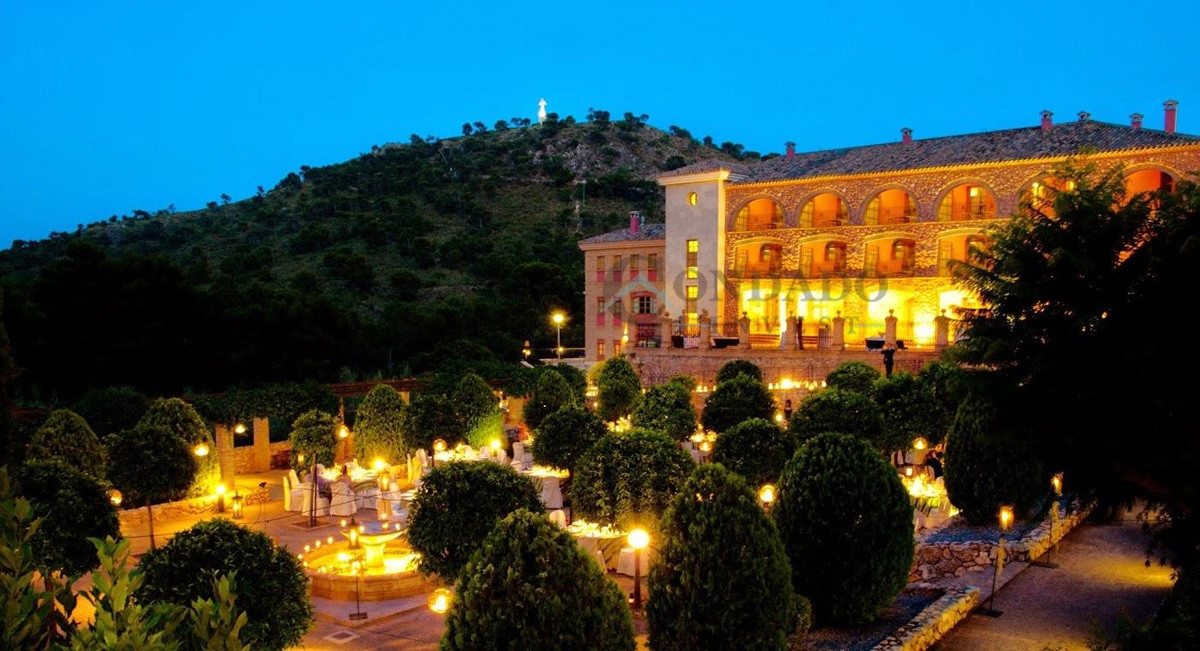
Spanish ibex (Capra pyrenaica)
Description and characteristics of the Spanish ibex
The Spanish ibex is a representative of the ibexes on the Iberian Peninsula. This species is further classified into two subspecies: Capra pyrenaica victoriae, which consists of the Gredos representative in western Spain, and Capra pyrenaica hispanica, which comprises the remaining three forms (Beceite, Southeastern, and Ronda Ibex).
These forms differ primarily in their geographical distribution across isolated mountain ranges. However, they are not distinct enough as species to form their own subspecies, so they are classified as forms of a single subspecies, differing in various parameters.
The Gredos ibex
The Gredos ibex is the sole representative of Capra pyrenaica victoriae and is also known as the western ibex, which inhabits the Sierra de Gredos mountain range in central Spain.
It is the largest representative among the ibexes on the Iberian Peninsula. Its horns reach up to 90 cm and are curved in a lyre shape, while males can weigh up to 75 kg. Females are significantly smaller, with their weight reaching around 35 kg.
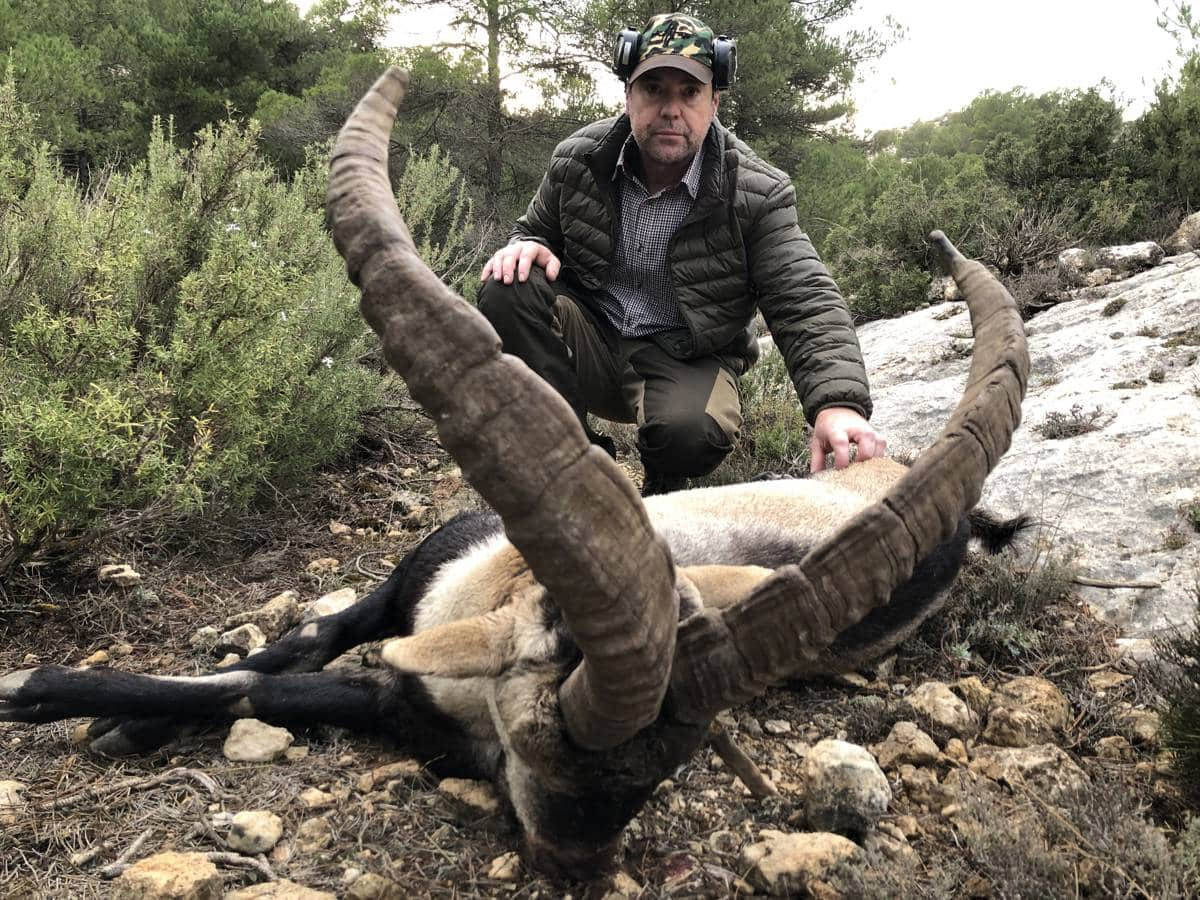
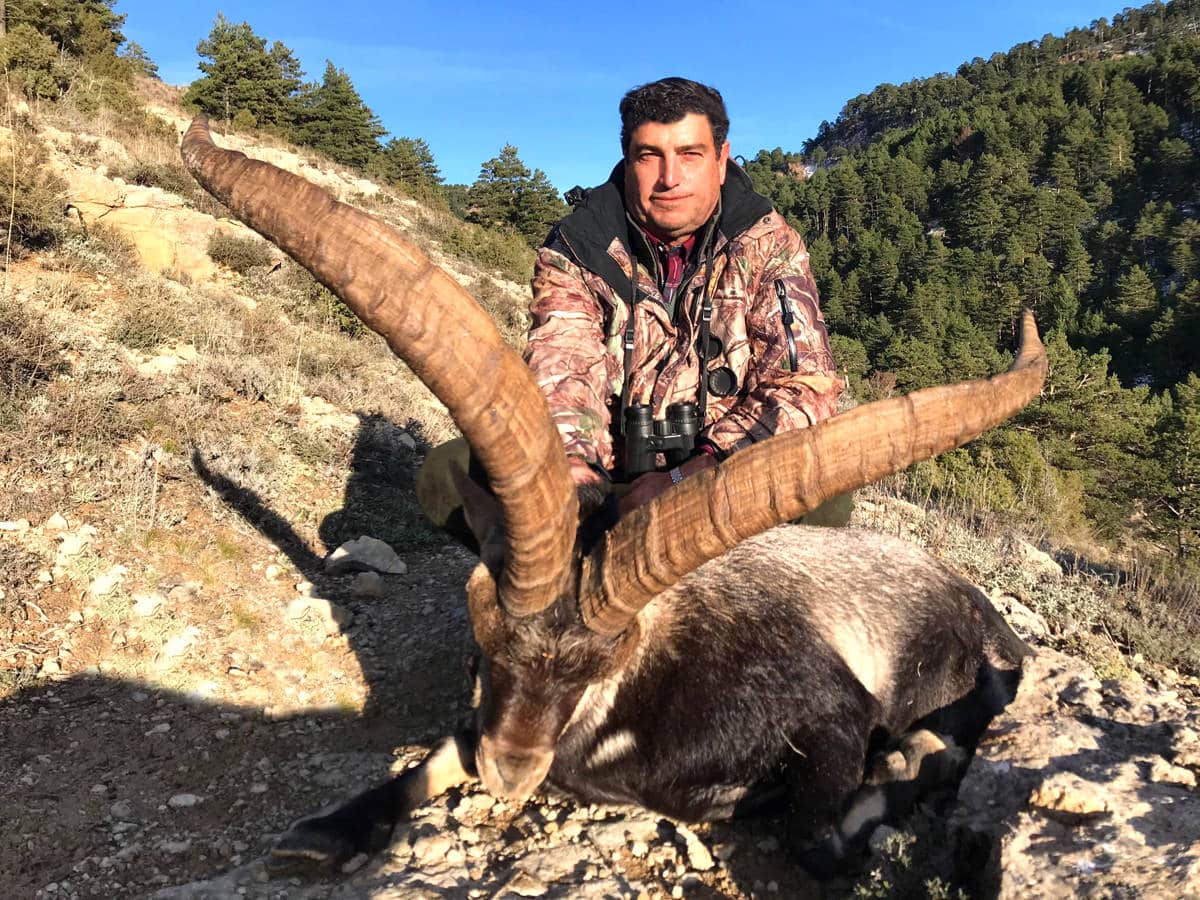
The horns are its most distinctive feature. They grow vertically and then widen and curve backward and inward, creating a lyre shape. They can reach lengths of over 90 cm, and distinct rings form on them with age.
The coloration of the Gredos ibex in its winter coat is significantly darker than that of other ibexes, and old males tend to have black patches that contrast against the dark brown body.
Beceite ibex
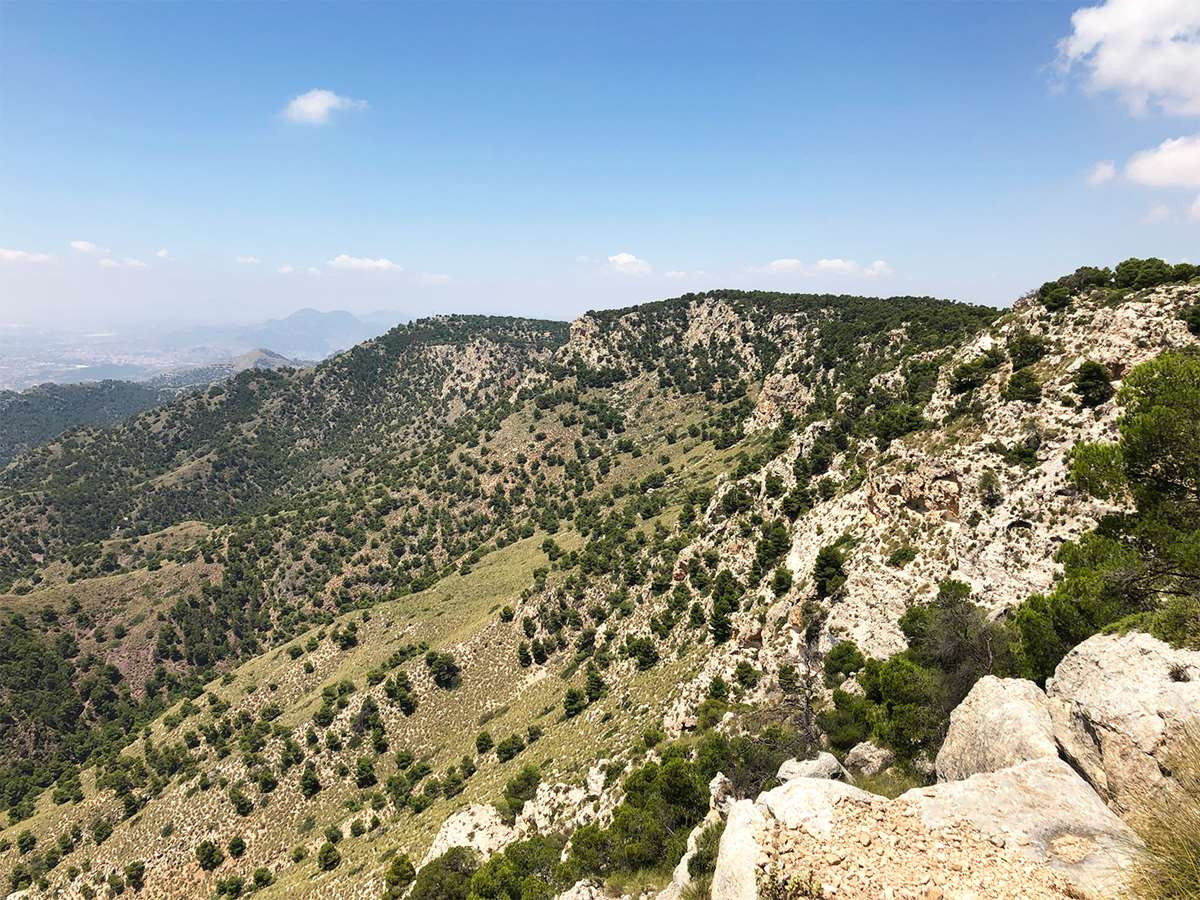
The ibex lives in the northeastern part of Spain in the regions of Aragon, Catalonia, and Valencia in the Tortosa-Beceite mountains. They live in rugged limestone terrain, which is lower than the central Pyrenees but very steep and covered with dense Mediterranean vegetation (oaks, pines).
The coat is lighter than that of the Gredos ibex. Its most distinctive feature is its horns, which differ from the Gredos ibex in their curvature. With age, the horns gradually open into a V-shape, and the tips are rather palmate (flat).
In terms of body build, they are slightly smaller than the Gredos ibex. However, they belong to the largest form of their subspecies.
Southeastern ibex (jihovýchodní)
The Southeastern ibex belongs to the same subspecies as the Beceite ibex. Its occurrence is in the southeastern part of Spain in the Sierra Nevada mountain range in Andalusia.
Its horns grow vertically upward and then curve backward, but they are not as widespread as those of the Beceite ibex.
Its coloration is rather lighter, and it is smaller than the previous representatives.
.
Ronda ibex
The Ronda ibex is the smallest representative of the ibexes on the Iberian Peninsula. This form is geographically very limited. It lives in the Sierra de las Nieves mountain range near the town of Ronda (Málaga province) and in the adjacent Sierra de Grazalema mountain range. The terrain in these mountains is limestone and very steep.
Its horns are the shortest and grow differently compared to the other forms. They grow straight and vertically upward (resembling the horns of the Alpine ibex), and only in the upper section do they curve backward with a slight rotation of just 90 degrees. They lack the wide lyre shape or the palmated nature of the Beceite form.
It is a small and stocky ibex. Males typically weigh between 50 and 80 kg, which is a significant difference compared to the Gredos form (up to 100 kg). It has a very short and light coat, which helps it better tolerate the Andalusian heat.
Where ibexes occur
All forms of the Spanish ibex share similar habitat requirements, but their biotopes differ depending on whether they live in the temperate zone of central Spain or in the hot Mediterranean climate of the south.
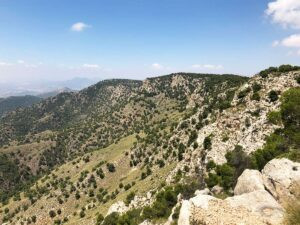
Their home consists primarily of rocky slopes, cliffs, and deep canyons, which provide them with natural protection from predators. Throughout the year, the ibexes undertake regular seasonal migrations: while in summer they seek out cooler pastures at altitudes exceeding 3,000 meters, in winter they descend to lower forested areas where they find shelter from the snow and easier access to food, which consists of mountain herbs, grass, as well as pine or juniper twigs.
How the ibex behaves
Ibexes live in single-sex herds for most of the year, and the groups come together during the rut. A strict hierarchy applies within the groups, where among the males, young individuals clearly show respect to older individuals.
During the summer, ibexes feed primarily on mountain herbs and grasses with buds. In winter, they descend to lower altitudes, where they browse on harder woody plants.
Hunting the Spanish ibex
Best time for hunting the Spanish ibex
Hunting the Spanish ibex takes place from the beginning of October until May (the hunting season may vary slightly depending on the location and the form of the ibex).
However, the best months are during their rut, which takes place from November to December (the so-called autumn hunt), and then the spring hunt, which tends to be best from March to May.
How th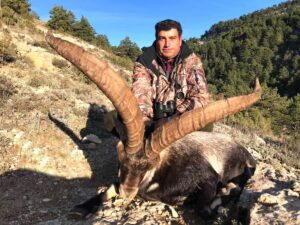 e Spanish ibex can be hunted
Hunting the Spanish ibex is predominantly about mountain stalking. So prepare ointment for your calves, you are heading into the mountains! If hunters wish, they can choose a very demanding hunt, conquering large elevation gains, climbing limestone massifs, etc., and hunting at long distances exceeding 300 meters.
Of course, professional guides can also arrange a far less physically demanding hunt and will select terrain that can be handled even by less physically fit hunters.
What you need for hunting the Spanish ibex
By its nature, hunting the Spanish ibex is the art of long-range shooting. Hunters usually utilize 6.5 mm caliber series, zeroed for example at 300 meters. Naturally, having appropriate ammunition is crucial. This is very similar to hunting the Siberian ibex.
A laser rangefinder is an essential tool in these regions, making it easier for the hunter to perfectly pinpoint the shooting distance in unfamiliar terrain.
Various rests, bipods, and tripods are definitely suitable accessories for weapon stability.
High-quality optics, preferably with ballistic correction, and of course observation binoculars or a spotting scope for proper game identification are required. Guides usually assist with this, but it remains a great aid for the hunter.
Ibex trophy
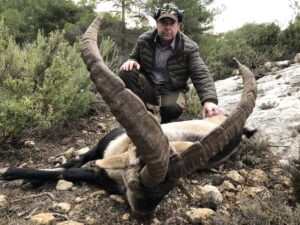
The trophy of the ibexes is clearly dominated by the massive horns, which vary depending on the form of the ibex.
Most hunters have the head with the trophy prepared by a skilled taxidermist.
All documentation and export documents are prepared by the hunting guides’ side, and the hunt organizer will primarily assist with this.
Preparing ibex meat
Meat from the Spanish ibex is a highly prized venison with unique characteristics. It is considered a culinary delicacy, but its quality and flavor significantly depend on the age of the animal and the season in which it was harvested.
We hope you found this article useful!
Your Huntastic Team


 e Spanish ibex can be hunted