The nutria (Myocastor coypus) is an invasive species from South America that first arrived in the Czech Republic in 1924 at a fur farm. From these farms, coypus gradually spread into the wild, either unintentionally or intentionally.
The nutria is a large aquatic rodent that weighs between 3 to 10 kg depending on sex and age. In captivity, they can live 10 to 15 years, but in the wild, it is significantly less.
In size, the coypu can be classified between the nutria and the beaver.
Its fur is very dense, high-quality, and was also the reason for its breeding in captivity. It is typically gray-brown in color. This rodent has a bare, round, and long tail, which is a safe distinguishing feature from the beaver.
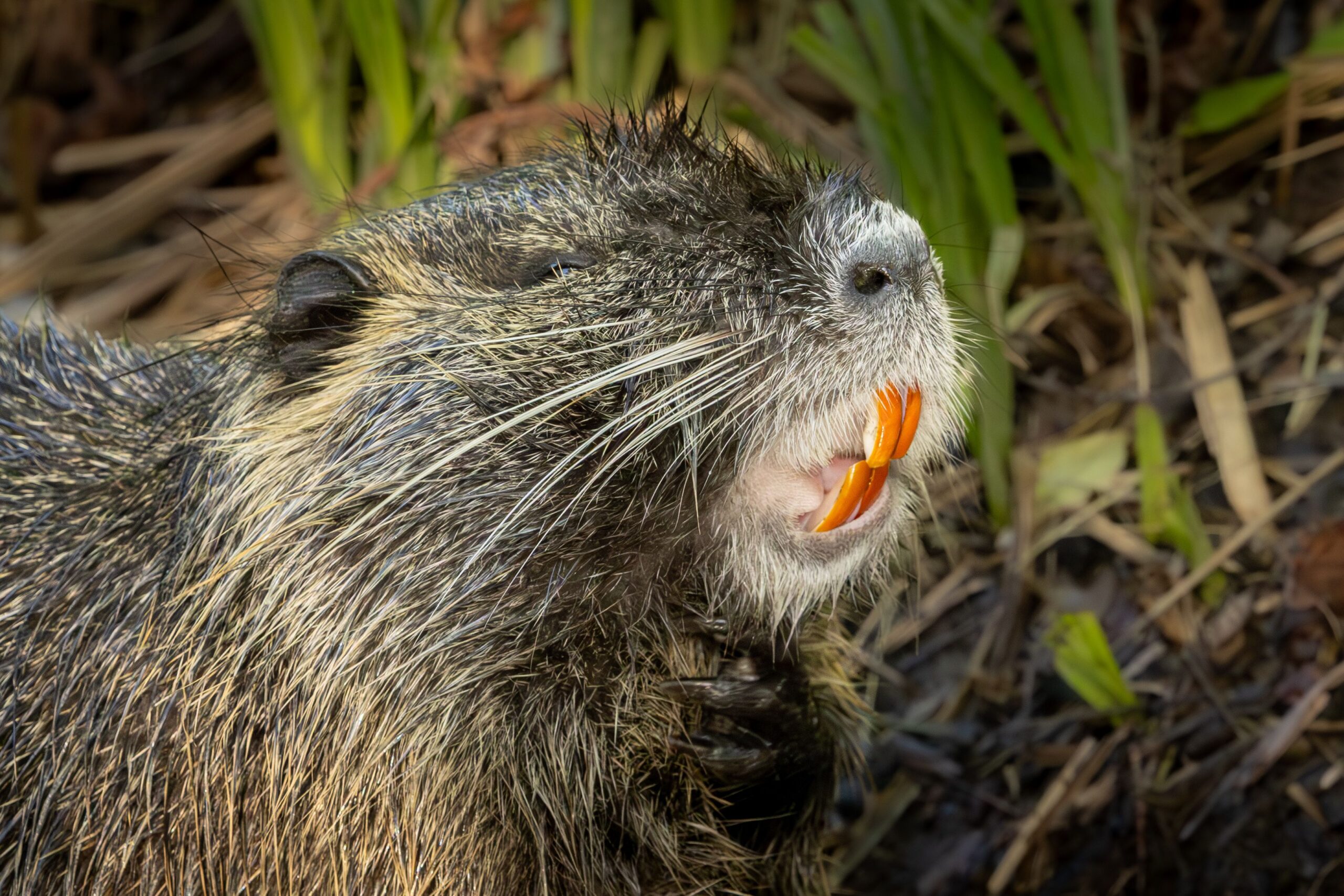
The nutria is tied to standing and slowly flowing waters. It uses reeds for nesting, banks, etc. It grazes in fields and feeds on tall grains.
The nutria is primarily a social creature that lives in family colonies consisting of several individuals to several dozen individuals. There is always a proper hierarchy led by a female.
They build burrows in the banks of watercourses, causing their collapse and compromising the strength of the banks, which is also the main reason for their targeted reduction.
The nutriais an invasive species and therefore does not have a designated hunting season. However, a proper hunter should always ascertain before shooting whether the animal has young or is heavily pregnant. It is always an ethical hunt. Although in the case of nutrias, this is relatively difficult to estimate, as they breed almost year-round, and a female can have 2 to 3 litters per year.
The most effective method of hunting is waiting near places where nutrias go to graze. Well-known paths that nutrias always use to go to pasture are utilized for this purpose.
The nutrias are primarily active at dusk and at night, which makes traditional daytime hunting a bit more difficult. However, nowadays it is not a problem to equip a weapon with night vision or thermal imaging and hunt with a small caliber rifle at night.
The nutriais a relatively large rodent that can irretrievably disappear into a burrow or under the water surface if the caliber is insufficient. For this reason, small caliber rifles or small caliber rifles are recommended. Larger calibers are not suitable due to the massive destruction of the tasty and nutritionally valuable meat.
Hunting with a shotgun is also common, which is more a matter of stalking and random encounters with the nutria, allowing the hunter to react immediately. Suitable pellets are around 4 mm to 4.5 mm.
Nutria trophies are almost non-existent today. Only if the hunter shows interest in the skin, the stuffing of the entire specimen, or its long incisors.
Nutria´s meat is very tasty and dietetically suitable for culinary preparation. It is most often roasted with vegetables and garlic. Its meat is tender and falls apart in young individuals, as it is delicate. Coypu meat is compared to a combination of rabbit, lamb, and chicken meat.
It should be noted that the coypu is a common carrier of leptospirosis and, according to veterinary authorities, is susceptible to trichinosis. For this reason, increased caution is required when handling raw meat, and it is always necessary to work with rubber gloves. All kitchen equipment must be thoroughly washed.
To prevent trichinosis, the coypu should be examined or thoroughly cooked so that the core temperature reaches at least 70 °C for 10 minutes, which reliably kills trichinosis larvae and other potential threats from wild game.
We hope this article was helpful to you!
Your Huntastic Team