The Japanese sika deer (Cervus nippon nippon) is the most widespread representative of sika deer in the Czech Republic and also the only subspecies that lives in free range.
The Japanese sika deer is smaller than its relative, the Dybowski sika deer. Stags reach around 80 kg in weight and measure 100 – 120 cm at the shoulder.
The original homeland of the Japanese sika deer, as the name suggests, is the Japanese islands and northeastern Asia. From there it was imported to the Czech lands during the 19th century and was kept only in game preserves. During the 20th century, due to damage to game preserve fences, closure of game preserves or common escapes, the Japanese sika deer got into the wild, where it perfectly adapted to the local climate of the Karlovy Vary and Plzeň regions.
Its coloring in summer coat resembles a fallow deer, with reddish to brownish coloring with white spots. However, unlike the fallow deer, it has a distinctive black stripe on its back. The most distinctive identifying feature remains primarily its head on a short neck, which has the typical appearance of a sika deer, thanks to which it can be reliably distinguished.
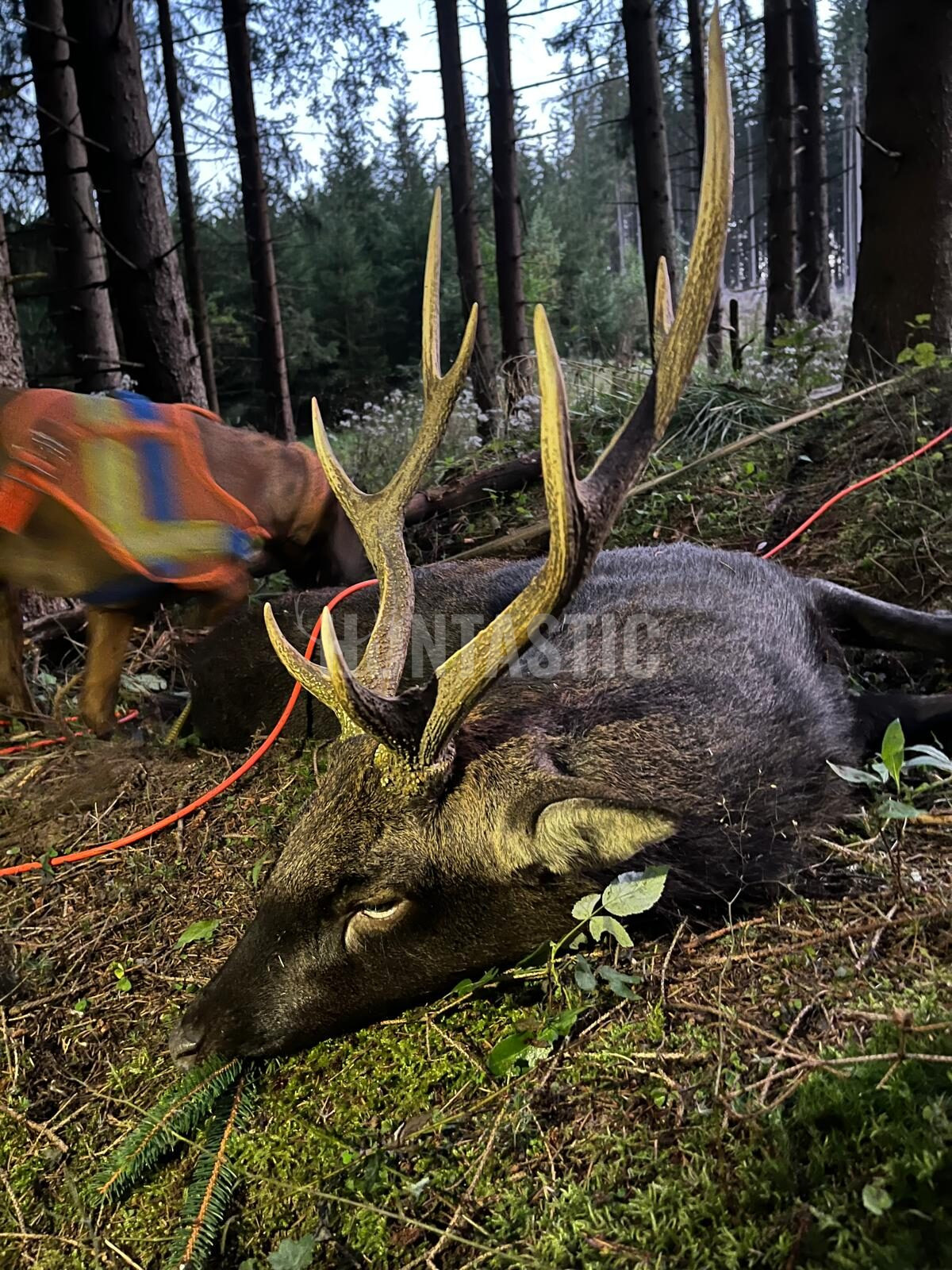
The antlers of the Japanese sika deer are relatively small, forming either six-pointers or eight-pointers. Abnormals can occur, but these are exceptions.
The Japanese sika deer inhabits extensive forests from lowlands to lower mountains. Its presence in fields, where it comes to graze in summer, is a matter of course.
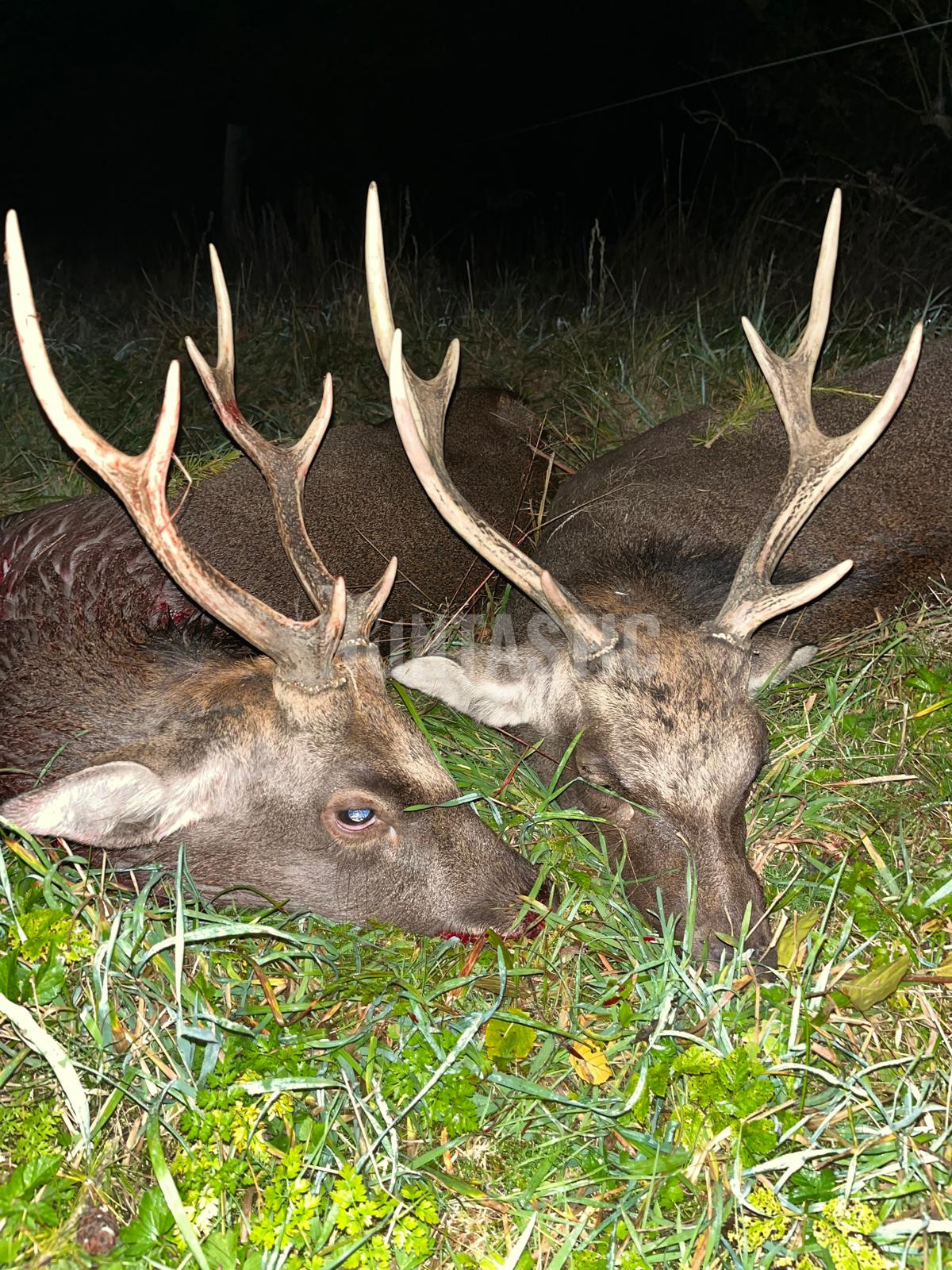
The Japanese sika deer does not deviate from the behavior of cervids and follows the given rule – hinds live in herds and stags usually live solitary. In autumn, from the second half of October to the first half of November, the rut of the Japanese sika deer takes place. The typical whistling of the sika deer can be heard.
Subsequently, during May to June, the hind gives birth to one, exceptionally two calves.
The biggest problem is its willingness to mate with red stag (European), when mixing of the gene pool of pure deer occurs and unfortunately a situation is already occurring where irreversible damage to local red deer populations is happening, which is undesirable.
Due to its non-native distribution (import from game preserves) and especially due to the damage that sika causes by stripping bark from trees in winter and mixing the gene pool of red deer, the sika deer is on the list of non-native animals and the goal is its eradication in our territory.
Hunting Japanese sika deer is interesting for individual hunters primarily during the sika rut, which usually lasts from the second half of October to the first half of November. However, hunting pressure in recent years has expanded the hunting of sika deer from September to the end of January.
The Japanese sika deer is hunted primarily on individual hunts from high tree stand or stalking during the rut and outside of it. However, in recent years it is increasingly hunted on driven hunts, when hunting includes females, young and male game both under two years of age and trophy animals.
Equipment for hunting Japanese sika deer is identical to that for Dybowski sika deer, which means standard big game calibers from 7 mm and above
The trophy of the Japanese sika deer is its antlers, which usually form six-pointers or eight-pointers.
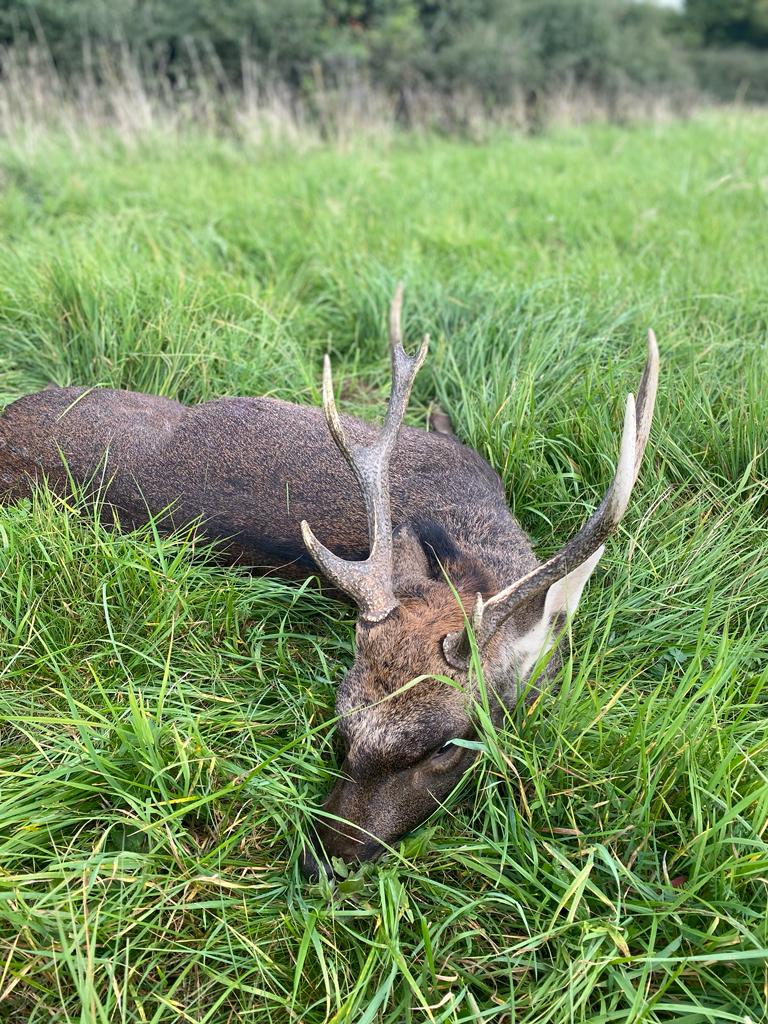
Meat from sika deer is very tasty, which can be prepared in various ways from grilled steaks, goulash, roasted loins, cutlets, etc.
We hope this article was useful to you!
Your Huntastic Team